
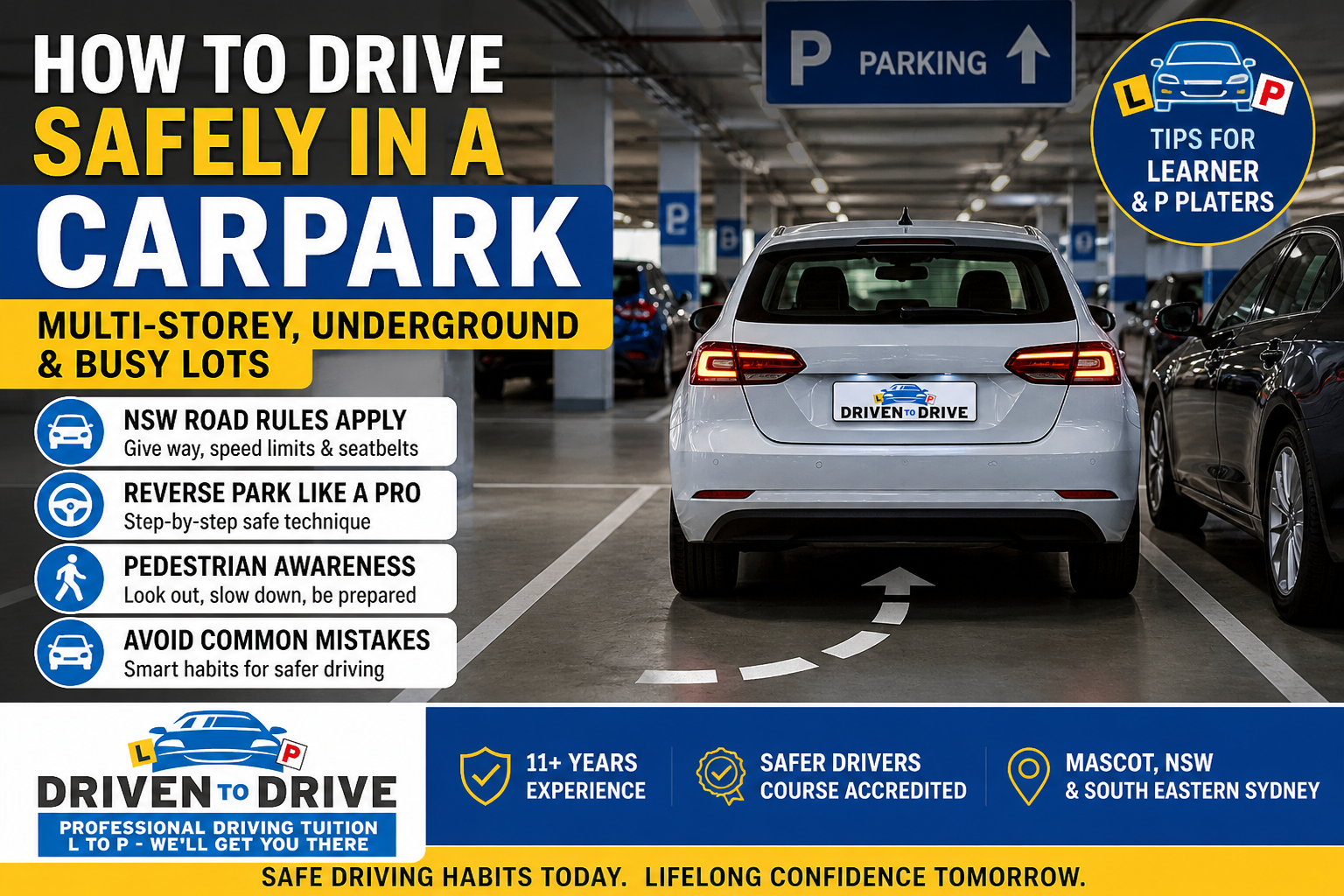
Carparks might seem like the easiest place to drive — low speeds, no traffic lights, and short distances. But in reality, they’re one of the most complex environments for learner drivers. In fact, a significant portion of minor vehicle damage and insurance claims in Australia happen in carparks due to tight spaces, unpredictable pedestrians, and constant stopping and starting.
Whether you’re practising in Mascot, navigating busy shopping centres in Maroubra, or parking near the beaches of Bondi, mastering carpark driving is essential for real-world confidence.
At Driven to Drive Driving School, Andrew and his team bring over 11 years of experience helping learners transition from Ls to Ps with calm, structured guidance. As a certified Safer Drivers Course facilitator, Andrew focuses on building awareness, precision, and safe habits that last a lifetime.
In this guide, we’ll break down how to safely navigate multi-storey, underground, and busy open-air carparks, along with the NSW rules that still apply.
Do NSW Road Rules Apply in Carparks?
Yes — and this is where many learners get caught out.
According to Transport for NSW and the Road User Handbook (latest edition):
- Road rules apply in public carparks (e.g. council-owned or roadside parking areas)
- In private carparks (like shopping centres), you can still be charged with negligent or dangerous driving
- Seatbelts must be worn at all times
- Give way rules still apply
- You must indicate when turning or reversing
- Speed limits (typically 10–15 km/h) must be obeyed
Even though it feels informal, you should treat a carpark like any other road — just tighter, busier, and less predictable.
Multi-Storey Carparks: What to Watch For
Multi-storey carparks are common across Sydney and present unique challenges.
Key Risks
- Low clearance heights
Always check signage before entering — especially if driving SUVs or vehicles with roof racks. - Tight ramps and blind corners
Keep left, slow right down, and be ready to stop. On blind bends, a light horn tap can alert other drivers. - One-way systems
Never drive against arrows — even if it seems quicker. - Low lighting
Turn your headlights on, even during the day. - Pedestrians stepping out suddenly
People often walk between parked cars without warning.
Scenario 1: Tight Spiral Ramp in Mascot
Situation: You’re driving up a narrow ramp in a multi-storey carpark in Mascot.
NSW Rule: Drivers must keep left and drive at a safe speed (Road User Handbook).
Safe Approach:
- Slow to walking pace
- Stay close to your side of the lane
- Keep both hands steady on the wheel
- Be ready to stop instantly if another car appears
Underground Carparks: Extra Considerations
Underground carparks can feel even more challenging due to limited visibility and confined spaces.
Key Risks
- Eyes adjusting from daylight to darkness
- Narrow lanes and concrete pillars
- Low visibility for reversing
- Tight parking bays
Practical Tips
- Pause briefly when entering to let your eyes adjust
- Take wider turns to avoid scraping wheels or panels
- Never rely fully on parking sensors — always check visually
- Don’t rush under pressure from other drivers
Scenario 2: Entering an Underground Carpark in Bondi
Situation: You drive from bright sunlight into a dark underground carpark.
NSW Principle: Always maintain control and adapt to conditions.
Safe Approach:
- Reduce speed before entering
- Turn headlights on
- Allow a moment for vision adjustment
- Scan for pedestrians immediately
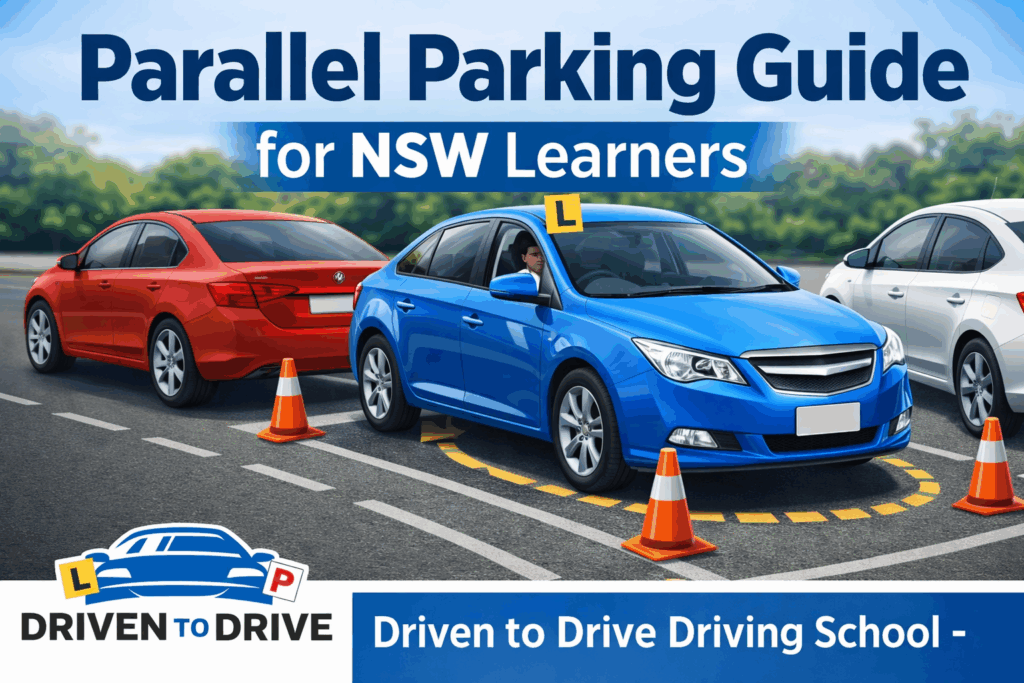
How to Reverse Park in a Carpark Bay Safely
Reversing into a bay is one of the safest habits you can develop.
Why Reverse In?
- Better visibility when exiting
- Reduced risk of reversing into pedestrians or moving cars
Step-by-Step Technique
- Position your car slightly past the bay
- Indicate early
- Check mirrors and blind spots
- Reverse slowly while steering into the space
- Straighten wheels and adjust position
Important Notes
- Use cameras and sensors as support tools only
- Always physically turn your head to check surroundings
- If your angle is off — reset and try again
Scenario 3: Busy Shopping Centre in Maroubra
Situation: You’re reverse parking with cars waiting behind you.
NSW Rule: You must indicate and ensure it is safe before reversing.
Safe Approach:
- Ignore pressure from other drivers
- Focus on correct positioning
- Reverse slowly and smoothly
- Reset if needed — never force the park
Pedestrian Awareness in Carparks
Pedestrians are the biggest hazard in carparks — especially children.
Key Points
- Pedestrians have right of way in marked walkways
- Many won’t use crossings — expect unpredictability
- Watch for:
- Shopping trolleys
- Prams
- Children running
- Elderly pedestrians
Golden Rule
Drive at walking pace and always be prepared to stop instantly.
Scenario 4: Pedestrian Between Cars in Randwick
Situation: A child suddenly runs out between parked cars.
NSW Principle: Drivers must avoid collisions and anticipate hazards.
Safe Approach:
- Maintain slow speed at all times
- Cover the brake pedal
- Scan continuously between vehicles
- Stop immediately if needed
Common Mistakes Learners Make in Carparks
Here’s what instructors at Driven to Drive see most often:
- Moving forward out of a bay without checking surroundings
- Cutting corners and clipping kerbs or pillars
- Rushing due to impatient drivers
- Not indicating when reversing
- Parking too close to lines
- Over-relying on cameras instead of checking visually
Fix: Slow everything down. Carpark driving is about control, not speed.
The Safer Drivers Course (NSW)
The Safer Drivers Course, run under NSW Government guidelines, is designed to help learners build real-world driving awareness.
Benefits
- Earn 20 logbook hours
- Improve hazard perception skills
- Learn risk management strategies
- Build safer decision-making habits
Andrew from Driven to Drive is a certified facilitator, delivering this course in a structured, supportive environment that helps learners become safer, more confident drivers — not just test-ready, but life-ready.
Penalties & Demerit Points (NSW)
Learner drivers in NSW must be especially careful:
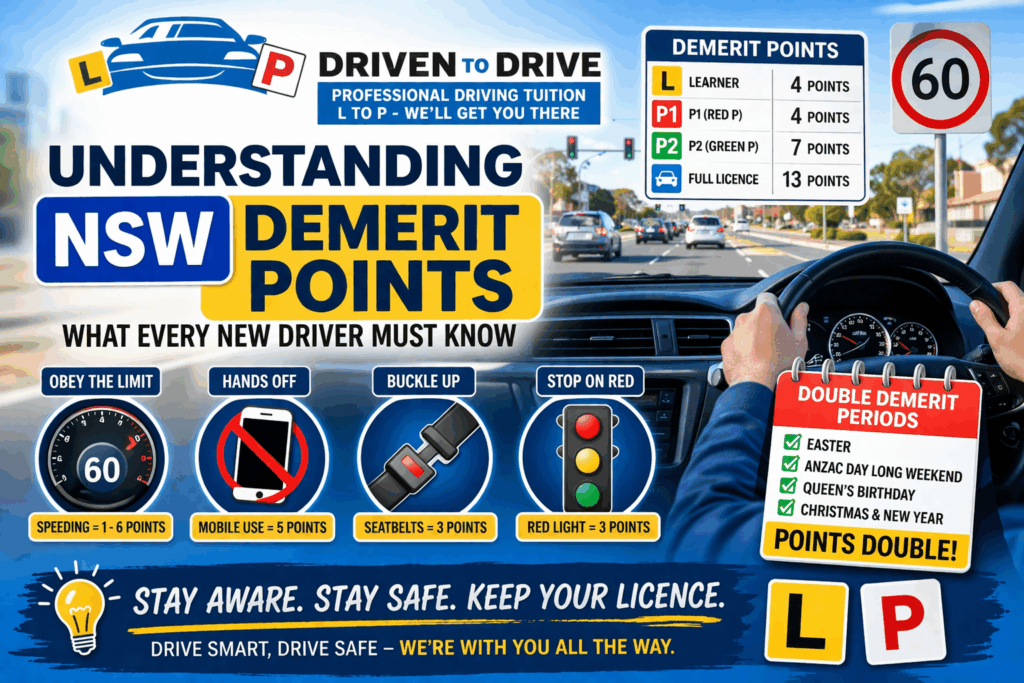
- You have only 4 demerit points
- Exceeding this results in a minimum 3-month suspension
- Offences like negligent driving or failing to give way can still apply in carparks
Always check Service NSW for the most up-to-date penalty information.
Expert Tips from Driven to Drive
- Drive slower than you think you need to — control is everything
- Check mirrors constantly — awareness reduces risk
- Plan your parking early — don’t make last-second decisions
- Practise in quiet carparks first before busy ones
- Stay calm under pressure — other drivers can wait
Government References
- Transport for NSW – Learner Driver Resources
- Service NSW – Getting Your P1 Licence
- NSW Road User Handbook (latest edition)
- NSW Safer Drivers Course
Conclusion
Carparks might seem simple — but they demand full attention, patience, and awareness. From tight multi-storey ramps to unpredictable pedestrians in busy shopping centres, these environments test your control more than open roads.
The key? Slow down, scan constantly, and never rush.
Confidence comes from structured practice — starting in quiet carparks and gradually progressing to busier ones.
Ready to become a safe, confident driver?
Book your lessons with Driven to Drive Driving School — South Eastern Sydney’s trusted driving school for over 11 years.
Or join our Safer Drivers Course in Mascot and earn 20 logbook hours while learning skills that will stay with you for life.
📞 0416 321 572
📧 driventodrive@outlook.com
🌐 https://driventodrive.com.au
Disclaimer: This blog provides general driving information only. Always refer to official NSW Government sources for the latest rules, penalties, and licensing requirements.