
By Driven to Drive Driving School
📍 Mascot, NSW 2020 – Serving Mascot, Botany, Rosebery, Eastlakes, Maroubra, Randwick & Bondi
📞 0416 321 572 | ✉️ driventodrive@outlook.com
🌐 driventodrive.com.au
Introduction
Every learner driver remembers their first few drives — that mixture of excitement, nerves, and determination to “get it right.”
At Driven to Drive Driving School, we know that where you practise is just as important as how you practise.
Finding quiet, learner-friendly roads helps new drivers build confidence before facing heavier traffic areas like the Sydney CBD or major shopping centres.
With over 11 years of teaching experience across Sydney’s South Eastern Suburbs, our instructors understand how the right environment can make all the difference. This guide reveals some of Sydney’s best-kept driving practice secrets — quiet, safe locations ideal for developing essential driving skills.
Rule Summary: What NSW Learners Should Know Before Practising
Before heading out, learners and supervisors must follow NSW Government learner driver requirements (Source: Transport for NSW – Learner Drivers):
- Display L plates clearly on the front and rear of the vehicle.
- Always drive with a fully licensed supervisor in the front passenger seat.
- Obey the 90 km/h maximum learner speed limit — even if the posted limit is higher.
- Zero blood alcohol concentration applies to both learner and supervising driver.
- Keep a logbook (digital or paper) to record every practice session’s duration and conditions.
- Plan routes carefully — avoid high-traffic roads until learners gain more control.
At Driven to Drive, we teach learners how to plan gradual route progression — from quiet car parks to residential roads, then eventually to highways and test routes.
Quiet Practice Routes: Suburb-by-Suburb Guide
Mascot
Ideal Areas:
- King Street and Carinya Avenue near Mascot Park (off-peak hours)
- Coward Street industrial section (weekends and early mornings)
These zones have light weekend traffic and wide lanes — perfect for mastering clutch control, braking, and gear changes.
Instructor Tip: Early Sunday mornings are the calmest. Andrew recommends focusing on mirror checks and lane positioning during these sessions.
Botany
Ideal Areas:
- Stephen Road and Sir Joseph Banks Street within the industrial estate
- Foreshore Road (early mornings) for exposure to wider lanes
During weekends, Botany’s business areas are nearly empty — giving learners ample time to practise turns and parking manoeuvres without traffic stress.
Instructor Tip: Practise smooth right turns here before attempting them in suburban traffic.
Rosebery
Ideal Areas:
- Mentmore Avenue and Dunning Avenue (weekend mornings)
- Rosebery Business Precinct offers long, straight stretches perfect for learning acceleration control.
Parent Tip: Schedule lessons after 5 PM when offices are closed for quiet evening practice sessions.
Eastlakes & Pagewood
Ideal Areas:
- Banks Avenue loop near Eastlakes Shopping Centre
- Baker Park area roads for gentle intersection practice
These are low-traffic residential areas with ample visibility — great for practising give-way rules and safe entry/exit at intersections.
Instructor Tip: Combine these routes with light roundabout practice at Wentworth Avenue to progress confidence gradually.
Maroubra & Randwick
Ideal Areas:
- Heffron Park loop roads (access from Fitzgerald Avenue)
- Anzac Parade service lanes near light rail stations (weekends only)
- Randwick Racecourse perimeter roads – very calm before events or during weekdays
Instructor Tip: Avoid event days or school start/finish times. These areas are perfect for mastering smooth lane merges before tackling main arterials.
Bondi & Surrounds
Ideal Areas:
- Birrell Street towards Waverley
- Bondi Junction car parks (after hours only, with permission)
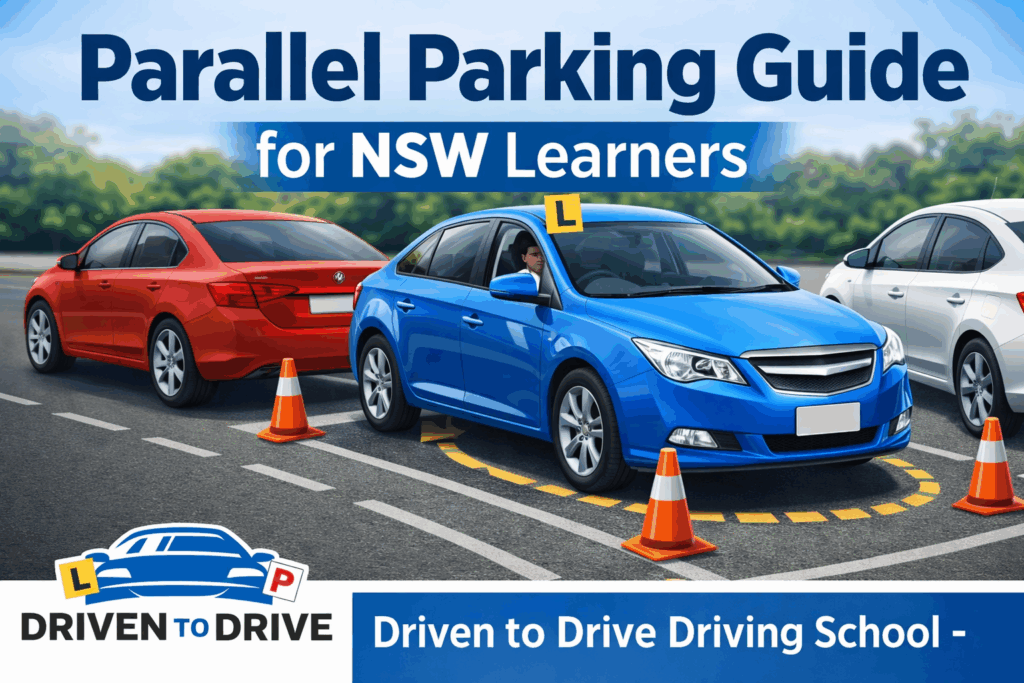
Here, learners can practise hill starts, parking, and reversing — critical skills for later test preparation.
Safety Reminder: Private car parks may have restrictions; always check signage or security permission.
Other Great Practice Opportunities
Industrial Estates (Weekend Practice)
Sydney’s business districts (like Alexandria or Matraville Industrial Area) are excellent on weekends. Wide roads and minimal traffic make them perfect for gear control, turning, and hazard scanning exercises.
Beach and Parkland Roads
Drive along La Perouse Loop or Malabar Headland access roads during early mornings. These scenic stretches help learners relax while practising speed control and hazard perception.
Shopping Centre Car Parks (After Hours)
Many local shopping centres (e.g., Eastgardens and Mascot Central) have spacious, empty car parks after hours — great for:
- Reverse parking
- Three-point turns
- Slow-speed manoeuvres
School Holiday Practice
During school holidays, school zones and university campuses often have reduced traffic. Areas around UNSW Kensington or Maroubra Junction High School are suitable for controlled, supervised sessions — especially for learners transitioning to busier routes.
Building Skills Gradually: Step-by-Step Progression
At Driven to Drive, we use a progressive route structure:
- Low-speed, no-traffic areas: Car parks and quiet backstreets
- Residential zones: Intersections and give-way practice
- Busier suburban routes: Lane merging, roundabouts, and traffic flow
- Main roads and highways: Once learners demonstrate consistent control
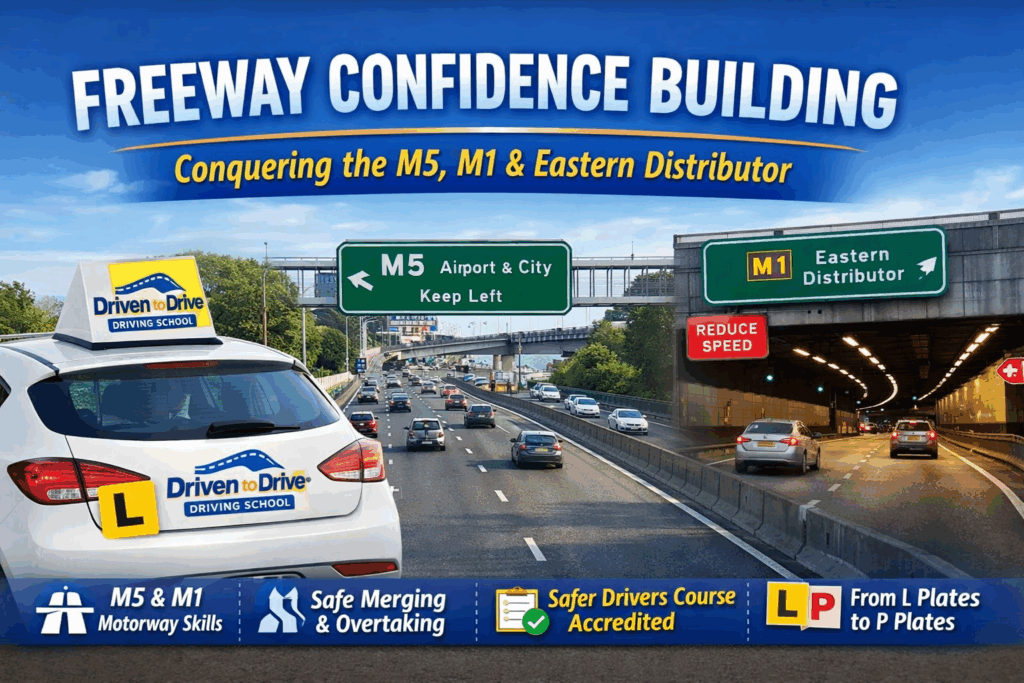
This method helps learners develop confidence and composure before moving into challenging zones like the Eastern Distributor or Anzac Parade.
Common Learner Mistakes (and How to Avoid Them)
- Practising in busy areas too early → Leads to stress and errors.
- Ignoring quiet-time opportunities → Early morning or late evening sessions are underused.
- Overconfidence after one good session → Learners should repeat calm routes several times before advancing.
- Poor supervision planning → Supervisors should know the route and have full control to intervene safely.
- Skipping parking practice → Confidence with manoeuvres prevents test-day panic.
Expert Tips from Driven to Drive
- Use early morning hours (6–8 AM) for low traffic and good visibility.
- Plan your sessions — don’t improvise; structured routes build consistency.
- Change environments slowly — avoid jumping from quiet roads to multi-lane arterials too soon.
- Track progress in your logbook with short notes on what went well and what needs review.
- Stay calm and patient — confidence develops through repetition, not speed.
The Safer Drivers Course Advantage
Learners under 25 can accelerate their progress with the NSW Safer Drivers Course, delivered at Driven to Drive by our certified facilitator, Andrew.
This course helps learners:
- Develop advanced hazard perception
- Build decision-making confidence
- Earn 20 bonus logbook hours
- Understand safe supervision practices before solo driving
More info: Safer Drivers Course – Transport for NSW
Government Reference Links
- Transport for NSW – Learner Drivers
- Service NSW – Getting Your P1 Licence
- NSW Road User Handbook (PDF)
- Centre for Road Safety – Learner Supervision
Ready to Drive with Confidence?
Become a safe, capable, and confident driver with Driven to Drive Driving School — Sydney’s trusted school with over 11 years of experience.
🔗 Book Now
🔗 View Lesson Packages
📞 Call 0416 321 572 or email driventodrive@outlook.com to book your first lesson or secure a spot in the Safer Drivers Course.
Opening hours: Saturday 7:30 am – 4 pm; weekdays & public holidays by appointment
Address: Mascot NSW 2020
Disclaimer: This blog provides general driving information only. Always refer to official NSW Government sources for the most current road rules, penalties, and licensing requirements.