

By Driven to Drive Driving School
📍 Mascot, NSW 2020 — Serving Mascot, Botany, Rosebery, Eastlakes, Maroubra, Randwick & Bondi
📞 0416 321 572 | ✉️ driventodrive@outlook.com
🌐 driventodrive.com.au
Introduction
Sydney’s South Eastern Suburbs are among the most dynamic driving environments in New South Wales. From the busy roads near Mascot Station to the light rail corridors through Randwick and Maroubra, learners encounter a unique mix of public transport systems that demand patience, awareness, and skill.
At Driven to Drive Driving School, our goal is to help learners of all ages and stages — from their Ls to Ps — develop not just the ability to drive, but the confidence to drive safely alongside buses, trams, cyclists, and pedestrians. With over 11 years of professional experience and as a certified Safer Drivers Course provider, we focus on calm, structured instruction that prepares every learner for real Sydney road conditions.
Understanding NSW Rules for Driving Around Public Transport
When sharing roads with buses, trams, and light rail, drivers in NSW must follow specific laws designed to keep everyone safe. Below are some essential rules, summarised directly from Transport for NSW and the NSW Road User Handbook (2024 edition):
1. Bus Lanes and Bus-Only Areas
- Bus Lanes: You can drive in a bus lane for up to 100 metres only if you’re entering or leaving the road, turning left, or passing another vehicle turning right.
- Bus-Only Lanes: Marked “BUS ONLY” — these are strictly off-limits to other vehicles.
- Operating Hours: Always check signs for time restrictions. Some bus lanes operate only during peak hours (e.g., 6–10 AM, 3–7 PM), while others are 24/7.
(Reference: Transport for NSW – Bus lanes and bus-only lanes)
2. Giving Way to Buses
- When a bus indicates (using its right indicator) to pull out from the kerb in a built-up area, you must give way to it.
- This rule applies to buses displaying the “Give Way to Buses” sign on their rear.
- Learners often practise this during test preparation routes in Mascot and Botany, where multiple public buses operate close to schools and residential zones.
(Reference: NSW Road User Handbook, Chapter 3 – Road Rules for Drivers)
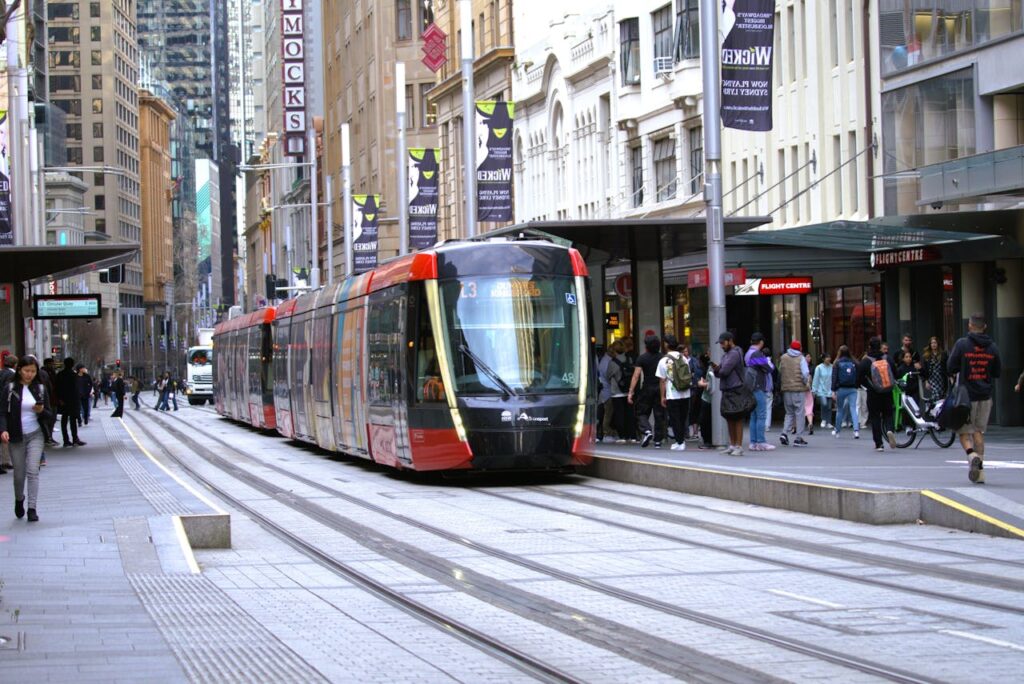
3. Light Rail & Tram Safety
- Always stop behind the white line at intersections with light rail crossings, even if there are no boom gates.
- Never queue across tram or light rail tracks.
- Always give way to trams when they’re moving through intersections or turning right.
- Do not overtake a tram on the right unless you’re on a multi-lane road and it’s safe to do so.
(Reference: Transport for NSW – Light Rail Safety)
4. Sharing Roads with Cyclists
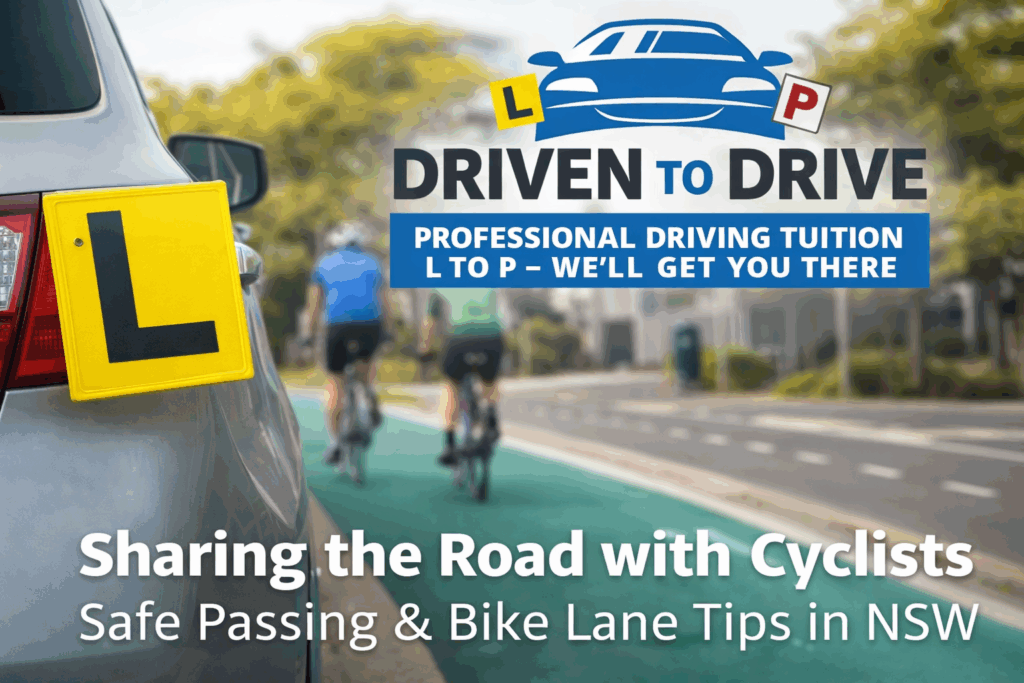
- When overtaking a cyclist, maintain a minimum distance of 1 metre (at speeds under 60 km/h) or 1.5 metres (above 60 km/h).
- Cyclists are legally allowed to use bus lanes unless marked otherwise.
- Always check mirrors and blind spots before changing lanes near Randwick and Eastlakes, where shared lanes are common.
(Reference: Centre for Road Safety – Sharing the Road)
Scenarios Learners Commonly Face
Scenario 1: Navigating Mascot’s Peak Hour Bus Corridors
Situation: Driving along Botany Road near Mascot during morning peak.
Challenge: Frequent buses merging from the kerb; heavy traffic flow.
Rule: Learners must give way to buses indicating right, maintain calm spacing, and anticipate bus movements early.
Driven to Drive Approach: Instructors teach learners to identify bus indicator patterns early and practise smooth deceleration to maintain traffic flow without abrupt stops.
Scenario 2: Approaching a Light Rail Crossing in Randwick
Situation: A tram is crossing Anzac Parade with flashing warning lights.
Challenge: Learner hesitates mid-intersection or crosses the white line.
Rule: Drivers must stop when lights flash or bells sound at tram crossings.
Driven to Drive Approach: Lessons include hazard perception practice — identifying cues like flashing signals or bells — before proceeding only when all warnings cease.
Scenario 3: Sharing Roads with Cyclists in Eastlakes
Situation: A cyclist rides in the left lane during evening traffic.
Challenge: Maintaining safe distance without crossing into opposing lanes.
Rule: Maintain 1–1.5 metres of clearance, adjusting speed safely.
Driven to Drive Approach: Andrew trains learners to slow down early, change lanes gradually if possible, and recheck blind spots before re-entering the lane.
Scenario 4: Bus Stop Exits in Rosebery
Situation: A learner approaches a bus pulling out from a kerbside stop.
Rule: Must give way if the bus has its right indicator on.
Driven to Drive Approach: Learners are taught patience — waiting a few seconds ensures safety and demonstrates courtesy to public transport vehicles.
Common Mistakes Learners Make
- Ignoring bus lane signs or hours — assuming they apply all day or not noticing limited hours.
- Failing to give way to buses leaving stops.
- Stopping on tram tracks due to poor lane positioning.
- Overtaking cyclists too closely in narrow suburban streets.
- Distraction near school zones with frequent bus movements and 40 km/h limits.
All these errors can result in penalties, loss of demerit points, and increased crash risk — especially for new drivers with limited hazard perception skills.
The Safer Drivers Course: Building Confidence & Awareness
For learners under 25, NSW offers the Safer Drivers Course, designed to enhance hazard perception and decision-making skills.
Delivered by accredited facilitators like Andrew at Driven to Drive, the course helps learners:
- Develop advanced hazard awareness and risk management
- Handle distractions and peer pressure while driving
- Earn 20 logbook hours toward their 120-hour requirement
- Prepare confidently for the Ps test through real-world simulations
It’s not just about passing a test — it’s about becoming a confident, capable, and lifelong safe driver.
(Reference: Transport for NSW – Safer Drivers Course)
Penalties & Demerit Points (Learner Compliance Note)
- NSW learner drivers have only 4 demerit points.
- Losing them results in a minimum 3-month licence suspension.
- Penalty amounts vary depending on the type and severity of offence.
- Always verify the latest updates via Service NSW – Demerit Points.
Expert Tips from Driven to Drive
- Plan your routes around known bus or tram corridors to reduce stress.
- Use mirrors regularly and check blind spots before merging or overtaking.
- Stay calm during congestion — safety matters more than speed.
- Avoid sudden lane changes in shared lanes near bus zones.
- Practise defensive driving — anticipate rather than react.
Every lesson at Driven to Drive is built on these principles, helping learners stay relaxed, responsible, and road-ready.
Government Reference Links
- Transport for NSW – Learner Drivers
- Service NSW – Getting Your P1 Licence
- NSW Road User Handbook (PDF)
- Safer Drivers Course – Transport for NSW
Ready to Drive with Confidence?
Become a safe, capable, and confident driver with Driven to Drive Driving School — Sydney’s trusted school with over 11 years of experience.
🔗 Book Now
🔗 View Lesson Packages
📞 Call 0416 321 572 or email driventodrive@outlook.com to book your first lesson or secure a spot in the Safer Drivers Course.
Opening hours: Saturday 7:30 am – 4 pm; weekdays & public holidays by appointment
Address: Mascot NSW 2020
Disclaimer: This blog provides general driving information only. Always refer to official NSW Government sources for the most current road rules, penalties, and licensing requirements.