
Introduction
If you’re feeling nervous about your NSW P-plate driving test — you’re not alone. Almost every learner feels a mix of excitement and anxiety on test day. The good news? With the right preparation, you can walk into the test feeling calm, ready, and confident.
The NSW driving test is designed to make sure you can drive safely, independently, and responsibly — not to trick you. This guide explains exactly what to expect, what examiners look for, and how to avoid the most common mistakes learners make on the big day.
Let’s walk through the process together so you can focus on doing your best behind the wheel.
Section 1: Before Test Day
Booking your test through Service NSW
You can book your driving test online or in-person through Service NSW. Once booked, you’ll receive confirmation of the date, time, and testing location. Try to choose a time of day when you usually feel calm, alert, and focused.
Required documents
Make sure you bring:
- your learner licence
- your completed and approved logbook (paper or digital)
- any corrective lenses you normally wear (glasses or contacts)
- your appointment confirmation (digital is fine)
Check everything the night before — avoiding last-minute stress helps you start the day calmly.
Choosing your test location strategically
It’s usually best to book your test in an area where you’ve practised regularly. You don’t need to “game the system” by finding the easiest location — familiarity and confidence matter more than anything.
Vehicle requirements and condition check
Your car must be:
- legally registered and roadworthy
- clean inside and outside
- fitted with working seatbelts for all seats
- fitted with functioning lights, indicators, wipers, horn, and mirrors
The examiner will not allow the test to continue if the car is unsafe, so it’s essential to check it beforehand.
What to bring on the day
Pack the essentials:
- licence and logbook
- water and a light snack
- any medical letter (if applicable)
- your phone — switched off during the test
Arrive relaxed, prepared, and ready to listen carefully to instructions.
Section 2: The Pre-Drive Vehicle Check
Before you start driving, the examiner will carry out a brief safety check.
What the examiner will inspect
Expect checks such as:
- indicators
- brake lights
- tyres
- windscreen condition
- seatbelts
Basic vehicle controls you need to identify
You may be asked to identify controls including:
- headlights and high beam
- wipers and washers
- demisters
- hazard lights
- handbrake
Be ready to show where they are — and how to use them safely.
Adjusting mirrors and seat properly
Take your time to:
- set your seat so you can reach pedals comfortably
- adjust mirrors to reduce blind spots
- ensure your head restraint is positioned correctly
This demonstrates good preparation and safety awareness.
Starting procedure
Start smoothly, check mirrors, indicate when pulling out, and always perform a full observation — including blind spots — before moving.
Section 3: Test Route Expectations
Typical duration
Most driving tests take around 30 minutes, including manoeuvres and normal driving.
Common manoeuvres tested
You may be asked to perform:
- reverse parallel parking
- a three-point turn
- kerbside stop or hill start
Practise calmly and consistently — examiners prefer control and safety over speed.
Types of roads you’ll drive on
Expect a mix of:
- quiet residential streets
- busier local roads
- roundabouts and intersections
The goal is to show safe, consistent behaviour in everyday situations.
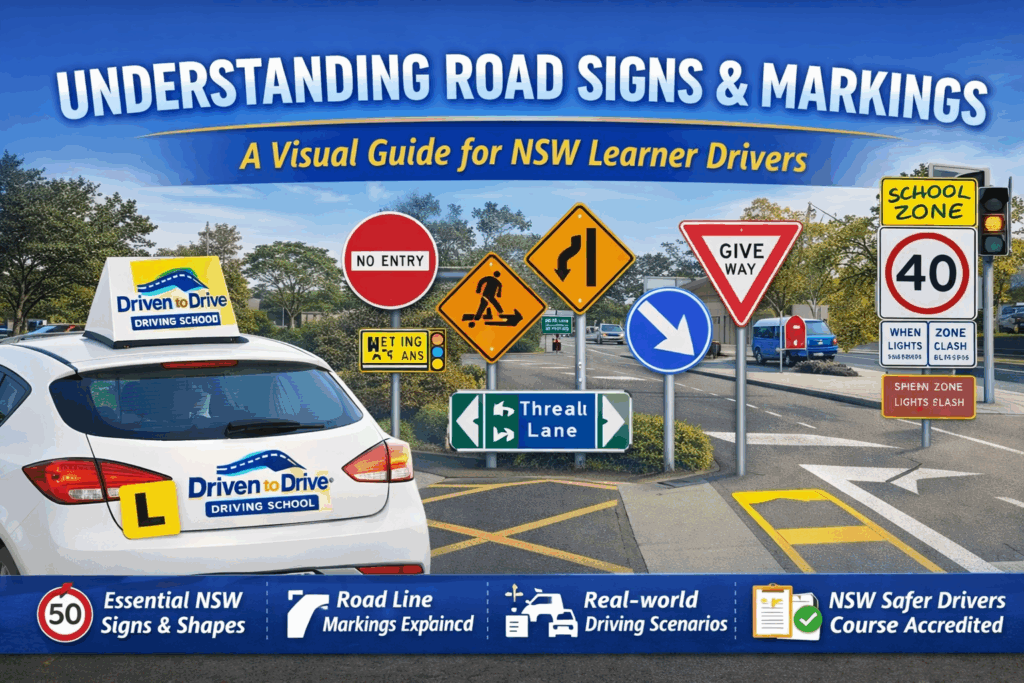
School zones and speed limit changes
Be especially alert near:
- school zones
- construction and reduced-speed areas
- merging traffic zones
Always check for signs and adjust your speed early.
Section 4: What Examiners Are Looking For
Observation and hazard perception
Regular mirror checks, scanning the road ahead, and identifying risks early are essential.
Speed management
Stay within the posted limit and adjust smoothly for conditions such as rain, pedestrians, or traffic congestion.
Smooth vehicle control
Examiners assess braking, steering, gear changes (if manual), and overall stability.
Following road rules precisely
Stop fully at stop signs, give way correctly, obey lane markings, and respond to traffic lights without hesitation.
Communication through indicating
Indicate clearly, early, and consistently — especially when turning, changing lanes, or pulling away from the kerb.
Section 5: Common Test Failures & How to Avoid Them
- Rolling through stop signs — always stop completely and check both directions.
- Incorrect observation at intersections — check left, right, ahead, and repeat.
- Speeding (even slightly) — going over by 5 km/h can still fail the test.
- Not checking blind spots — essential before merging, turning, or pulling out.
- Poor reverse parking — practise often, staying slow and controlled.
Section 6: Managing Test Day Nerves
Sleep matters
Aim for a full night’s rest before test day.
Arrive early — but not too early
Getting there 15–20 minutes ahead gives you time to breathe and prepare.
Breathing techniques
Slow, deep breaths help calm your nervous system — especially before starting the engine.
If you make a mistake
Stay focused. A small mistake does not automatically mean failure — keep driving safely.
Stay mentally present
Listen carefully, stay aware, and focus only on the next decision, not the whole test.
Section 7: After the Test
Understanding your result
The examiner will explain:
- your result
- your strong areas
- anything that needs improvement
If you pass
Congratulations — you’ll receive instructions on displaying P-plates and following P-plate conditions.
If you don’t pass
It’s normal. Learn from the feedback, practise targeted skills, and book again when ready. Many confident drivers today didn’t pass on their first attempt.
Rebooking
Take time to review, practise, and return with clearer understanding and renewed confidence.
Conclusion
Passing your NSW driving test isn’t about perfection — it’s about showing safe judgement, awareness, and control. With practice, patience, and preparation, you can approach test day with confidence instead of fear.
If you’d like guidance, structured lessons, or test-day preparation support, professional driving instruction can make a huge difference — helping you not only pass, but drive safely for life.
Ready to Become a Safe, Confident Driver?
Driven to Drive Driving School has supported learners in Mascot and the South Eastern Suburbs for over 11 years, helping them move from Ls to Ps with confidence, calmness, and lifelong safe-driving habits.
📞 0416 321 572
📧 driventodrive@outlook.com
🌐 https://driventodrive.com.au
Join our Safer Drivers Course in Mascot and earn 20 logbook hours while learning the skills to drive safely for life.
Disclaimer
This blog provides general driving information only. Always refer to official NSW Government sources for the latest rules, penalties, and licensing requirements.